







I didn’t expect Slay the Spire to become one of my forever games
A Slay the Spire review by wakasm
What is this game Slay the Spire?
Slay the Spire is a roguelite deck-building game that kind of sneaks up on you, or at least, it did for me. At a time where there wasn’t that many games in this genre (now it feels like there are hundreds of variations of the same format). When it first came out, I didn’t realize it was going to become this genre-defining thing. People mentioned it to me but without any real explanation… I didn’t really give it a serious look, and then one day I realized I already owned it from a Humble Bundle. Once I actually played it, I was hooked.
You pick a character, climb a multi-act multi-pathed randomly generated tower called the Spire, and fight enemies using a deck of cards you build as you go. Your deck starts off simple with the same cards each time, but after every encounter and most events in the game, you are rewarded with the option of 3 cards to draft, some rarer than others, and the world is your oyster in terms of what and how you build your deck from that point on.
If you die, the run is over. You start again, but with more knowledge, more unlocks (at least for the first 20 games or so)… and if you win, well you just unlocked higher difficulty options called Ascensions (more on that later).
It’s part deck-builder, part roguelike, part… I don’t know… dungeon crawl for lack of a better way of describing it, all in it’s own unique world and themes… and at the time it felt like something that could only really work as a video game (but time would tell that it could become a board game too!).
You will encounter events, shops, Elite monsters and bosses to fight… each with their own unique challenges and ways to force you to make long term decisions with their rewards. The formula is really addicting.
What I liked about Slay the Spire
Enemies Tell You Exactly What They’re Doing
One of the smartest things the game does is showing enemy intent. Enemies tell you exactly what they’re going to do most turns. It’s such a unique twist that just… works. It really changes everything. You almost always know how much damage is coming at you, which enemies are attacking and how, and what you need to plan around. Combat becomes a puzzle instead of complete guesswork, and I don’t remember many games doing this as cleanly before. It’s sort of like when Chrono Trigger put enemies on the screen instead of just being random encounters completely and you thought… well that’s pretty genius, what haven’t I seen this before? Well, this was also a lightbulb moment. Maybe it’s existed elsewhere but I feel like this was the first time I’ve seen this mechanic.
Every Run Feels Completely Different
Every run feels different. Between cards, relics, potions, and events, you can end up with completely unique decks and even when you are aiming for specific combos or synergies, luck and RNG just push you in a different direction and you find yourself chasing that same build in later games. Sometimes you build super lean, fast combo decks. Sometimes you end up with big, messy decks that somehow still work. Other times… you get rare duplicates or those perfectly sick combos that stack into ridiculous poison builds, orb builds, or defense builds that just produce really strong output that trivialize (most) of the rest of the game and it always feels rewarding and earned since you rarely can force these things to happen.
Bosses That Counter Your Strategy
The balance is also really impressive. Early on, it often feels like you’re barely surviving. Then your synergies come online in Act 2 or Act 3 and suddenly everything is dying and you find yourself starting to feel immortal. But… at the same time, bosses are designed to counter popular strategies which is yet an even more interesting take in the depth this game offers. If you rely on long combo turns, you might run into a boss that limits how many cards you can play. If you play a poison build… you might find yourself against a boss that respawns after death and now, all those lost cards you used to ramp up your poison are gone and you have to start over. If you go all-in on one idea, the game might force you to adapt. You never know which boss you’ll see until you are inside it’s act… so you’re encouraged to build backup plans instead of just chasing one combo.
Each Character Feels Like a New Game
Then, somehow, they made each character feels really different. A lot of games give characters a tiny bit of variety… but not in Slay The Spire. Here, ALL the cards minus a core set of neutral cards are specifically made for that character. I started with Ironclad and thought that was my “main” character. Then I played Silent, and suddenly that was my favorite. Then the same thing happened again with Defect. Every character resets your enjoyment because they all ask you to think about the game in a different way and all the cards are unique. It becomes a new puzzle to master each time.
Ascension Mode Adds Endless Longevity
The Ascension system adds a ton of longevity. Every win unlocks a harder version of the game. Enemies get tougher, elites show up more often, and mistakes matter more. It goes all the way up to Ascension 20. I’ve never beaten Ascension 20 myself. I think the highest I’ve reached is around 15. But it always feels like there’s something to strive for and maybe this is what becoming a chess master feels like as you play the game on a deeper level each time.
Risk vs Reward Is Constant
Pushing your luck is a huge part of the experience and strategy. Elites are dangerous, but they give relics, and relics are how you spiral out of control. You’re constantly choosing between safer paths and riskier ones, although, I do think at harder ascensions these become less choices and more mandatory if you want a chance at winning… either way push too hard and you might lose the run early. Play it too safe and you might not be strong enough later. That tension is a big reason the game stays exciting. You see this with the paths you choose, but also in it’s upgrade/rest site system where you often really want to heal but you also want to permanently upgrade your cards too… it’s a real push/pull decision every time (and I almost always upgrade at the expense of some runs).
The Extra Modes and Mods Keep It Fresh
There’s also a ton of extra content. Daily Climb adds wacky modifiers and shared runs with leaderboards. You can compete with friends on score or progress. (I love seeing my character progress against my friends… this was such a fun addition for what it is). The modding scene is huge. Custom characters, ridiculous rule sets, even playing as bosses. Workshop support adds an entire extra layer of replayability.
Experimentation Is Often Rewarded
The game really rewards experimentation. Cards you think are bad can suddenly become amazing with the right setup. You’re constantly learning card values, learning from mistakes, and using that knowledge in future runs. The loop of experimenting, dying, and trying again is extremely addictive and while other games have it, it’s very much in existence here.
What I didn’t like about Slay the Spire
It’s Almost Too Addictive
There really isn’t much I don’t like about Slay The Spire. Maybe that is has been too addicting? Honestly, everything that is frustrating about it feels fair and if anything, I can get annoyed that I’m not good enough yet, after years of playing, to actually beat Ascension 20 on any single character. But from an actual gameplay perspective… I don’t really have any complaints. It can also be annoying from an achievement hunter perspective… but one day, maybe I’ll get there.
RNG Can Feel Brutal
This is probably more of a feature, but there are times where the RNG in the game can just suck, especially when you get close to a really strong build and just need one or two enabling cards and you never draw them. This is likely a worse feeling the higher the Ascension level you play. I know some people out there can consistently win at the hardest settings, but for us more normal humans, this can be a negative if you have too many bad back to back runs.
Limited Meta Progression
I think games these days have a longer meta progression curve to them and Slay The Spires progression is really short when it comes to unlocks and content. On some level, this cuts both ways but this is likely more a negative than a positive.
Final thoughts
Slay the Spire takes the best parts of deck-building games, roguelikes, and dungeon crawls and mixes them into one incredibly well-executed package. You start with a tiny, simple deck, and by the end of a run you’ve built something completely unique. You’re always making meaningful decisions. Heal or upgrade. Fight the elite or avoid it (I now almost always try to kill as many Elites as possible…). Cull your deck or lean into something weird.
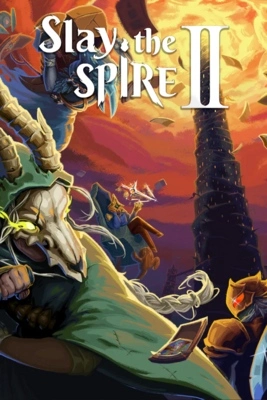
There’s rarely a single correct choice, and that’s part of why it works so well. It challenges you, teaches you, and keeps pulling you back in. It inspired an entire wave of games after it, and for good reason. Since I’m writing this review so much later than when I first experienced it… I can add that I can’t wait to see what Slay the Spire 2 does next.



















Disagree With Me Here
Discussion and disagreement are welcome here — that's what makes talking about games fun. Just keep it kind. Attacks on people, not ideas, will be removed.