







Donkey Kong Bananza Review: I Only Played It for the Cards
A Donkey Kong Bananza review by wakasm
I wasn’t interested in Donkey Kong Bananza. I had probably experienced the first ten minutes close to ten times at different Target demo stations because my son would run over to whatever the newest Switch game was, but nothing about that opening made me want to keep going. I played through it once, wasn’t impressed, bought the game for him anyway, and then watched him move on after maybe a level or two. He does revisit Mario Party, Mario Kart, and Mario Maker 2 (for reasons that are a whole different conversation), but sticking with a long game is not usually what he does. That was more or less the end of it.
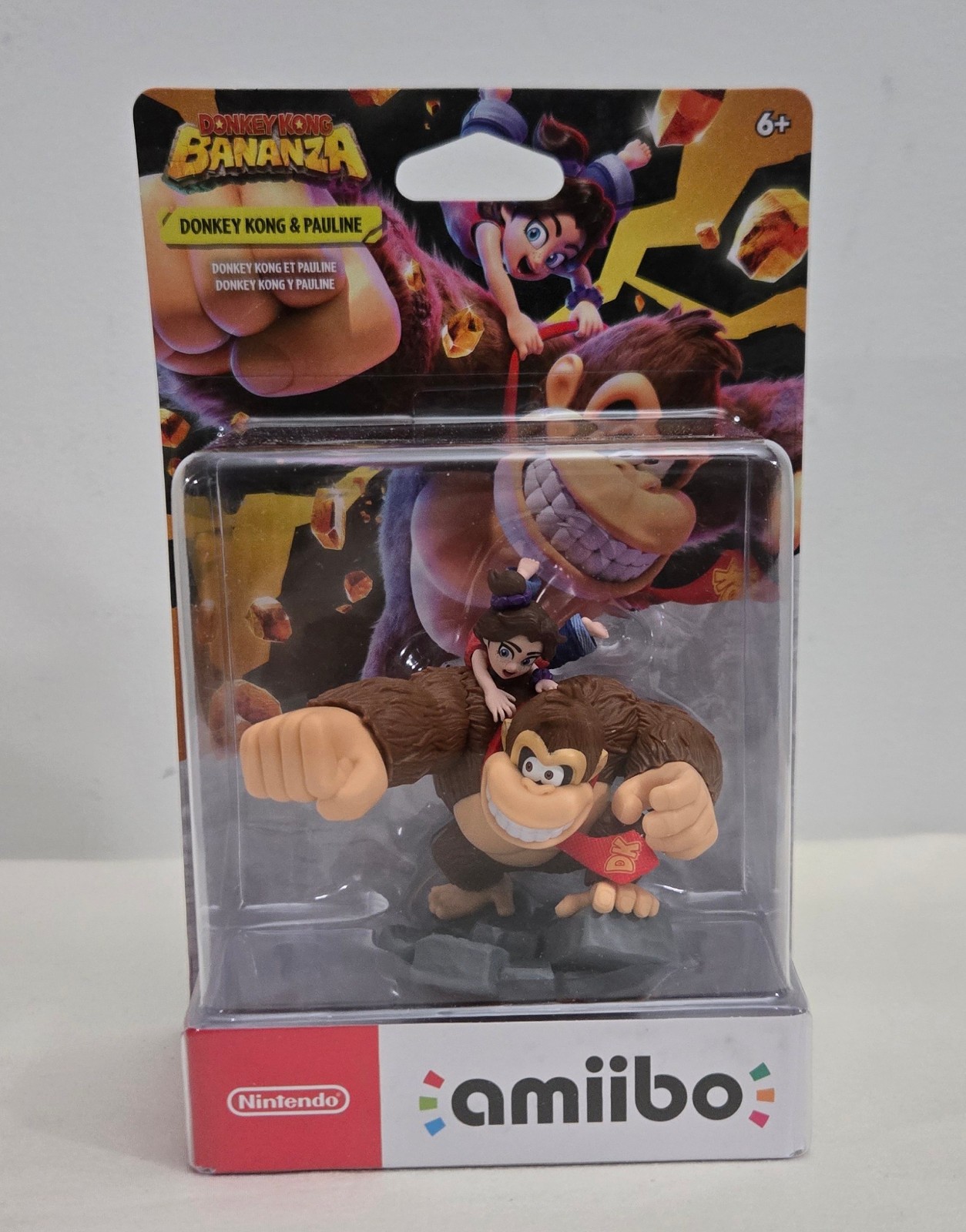
Then Nintendo announced the DK Challenge. Even that wasn’t enough at first. My seven-year-old son started earning the cards tied to the older games, mostly by rewinding every time he missed something, and he was proud of the six or seven he managed to unlock. I tried to explain that he might learn the games better by starting at the beginning, but he was seven and having fun, so whatever. When Nintendo announced that finishing all 39 challenges could earn us a physical card set, the whole thing changed. I told him we would need to do one or two every day, and while his energy was high on the idea he started and fizzled out, and I decided I could do it instead. We already collect amiibo and Sonic cards, so this could be something fun for both of us. I also thought I could probably knock it out without too much trouble.
I was VERY wrong about that last part.
What is Donkey Kong Bananza?
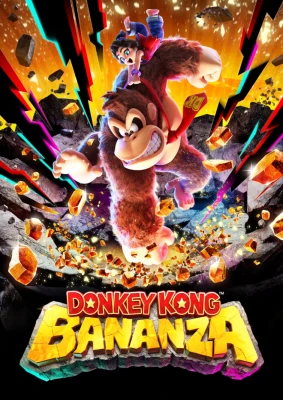
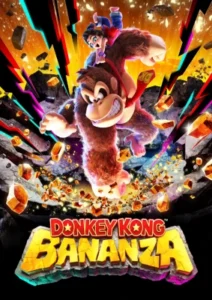
Donkey Kong Bananza is a 3D platformer built around destroying terrain, collecting Banandium Gems, and traveling deeper through a layered underground world. Donkey Kong teams up with a 13-year-old Pauline, whose singing unlocks transformations that change how he moves, fights, and tears through each layer.
- Donkey Kong can punch through walls and floors, climb most surfaces, pull out chunks of terrain, throw them, and ride them.
- Banandium Gems award Skill Points that improve health, movement, destruction, and transformation abilities.
- Kong, Zebra, Ostrich, Elephant, and Snake Bananzas each provide a different set of powers.
- Fossils unlock outfits, while gold pays for shops, Getaways, healing, and other services.
- Each layer mixes exploration with combat rooms, puzzles, races, challenge courses, bosses, and hidden collectibles.
- The main story continues into an epilogue with harder rehearsals and a final Pauline performance.
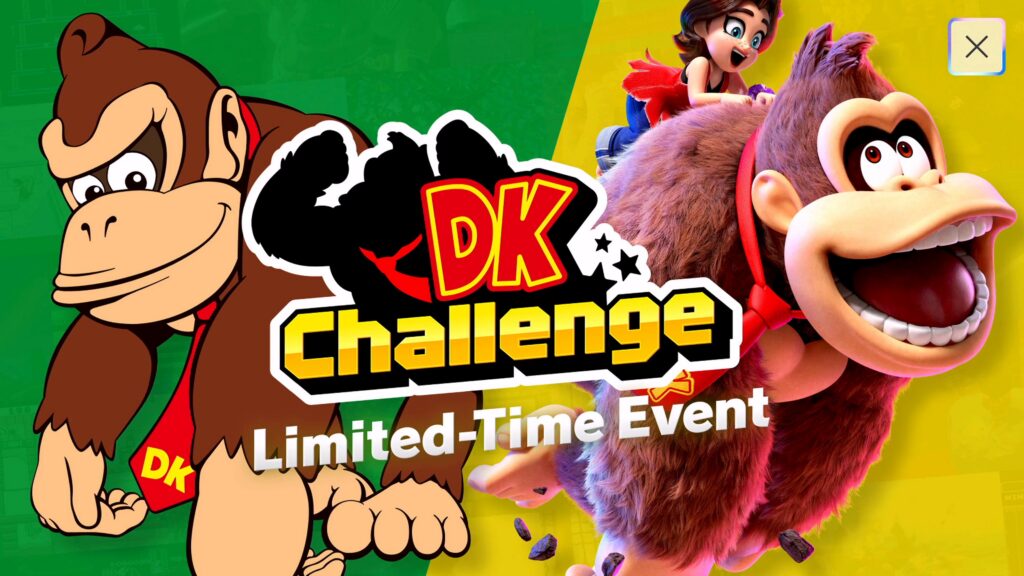
The important part for my playthrough is that the DK Challenge didn’t work the way I expected. The classic-game cards could drop you directly into a level or boss attempt. I assumed the Bananza cards would do something similar. Instead, the game checked your actual save progress, which meant you had to play the full game (it’s unclear to me if anything unlocked had you done it already, but I’m pretty sure you had to re-trigger things in game regardless) and several of the final cards required finishing the story, collecting 600 Banandium Gems, and completing late-game challenges. I started around August 22 or 23 with a September 1 deadline. All of a sudden this wasn’t a quick event. I was playing every night. For hours.
What I like about Donkey Kong Bananza
It completely changed my mind
The first world or two did not fix my original impression. I don’t usually love open-world collect-a-thons, and I have a history of falling away from them. I never really played Banjo-Kazooie or Banjo-Tooie. Super Mario 64 is probably the one I played the most, while Sunshine is a game I stopped playing as a kid and I never finished every later 3D Mario game either. I didn’t play the Spyro games, I haven’t played every Crash Bandicoot, and I went into this thinking I would have to power through it for my son’s cards.
It took two or three days before the movement and controls really clicked. Once I had more powers and understood the momentum, Donkey Kong stopped feeling awkward and started feeling fast. I would enter a new layer, work out what kinds of challenges were there, find bananas, and keep moving. At the same time, the deadline put this constant thought in the back of my head: I need to move, move, move, but I also need to find, find, find. One of the last challenges needed 600 gems, so rushing past everything wasn’t going to work.
I don’t think a game has surprised me like this since Breath of the Wild. At least not a Nintendo one. I also expected not to like that game, then loved it and played through the whole thing. Bananza has more rough edges, and it never gives you that same feeling that you can tackle the entire world in any order, but it kept finding new ideas. The worlds changed, the powers changed, and the movement became smoother the longer I played. A lot of the time when I died, it was my fault because I was trying to do something weird. That is usually a good sign.
Destroying the world gives you real freedom
Donkey Kong can punch through most of the world. If I saw a destination on the other side of a wall, a lot of times I could just make my own route. I could dig under something, climb around it, throw chunks, or combine movement tricks in ways that probably weren’t the intended solution. Nintendo still finds ways to stop that freedom when a story sequence or challenge needs a specific power, but it doesn’t lock everything down.
This is a strange balance because the game is structured and pretty formulaic. You reach a layer, meet characters, sometimes find an Elder or other roadblock, unlock or use a power, maybe tackle a new trick from the environment like floating rock or bouncing rock, and move toward another boss. Still, the terrain destruction creates enough room inside that structure that I rarely felt like I was walking down one exact hallway. There is even one point where you can choose between the Jungle and Freezer layers, although I picked Freezer and I am not sure why the game only makes that kind of choice once.
Pauline gives the whole game a ridiculous amount of charm
I didn’t expect to care about Pauline. She is cute, she says funny things, and her relationship with Donkey Kong becomes genuinely sweet. Every time you rest at a Getaway she has another little comment. Every time Donkey Kong finds a gem, you get another excited “Ooh, banana!” I heard that around 600 times and somehow never got tired of it.
The Fractones help too. They are these crystal-like people with their own lore and personalities, and they change shape depending on their job. You can punch them, which made me feel bad, but they reform. The different animals and layer inhabitants give every area something new to look at, and the Getaway butler is great and always asked to be tipped. None of this needed a huge story explanation. The little reactions and animations sold it.
Pauline also makes the transformations feel like more than a power button. She sings each one into existence, the music changes, and suddenly I am listening to a song yelling “Zebra!” while DK runs across water. This should have annoyed me eventually. It never did.
Every Bananza has a reason to exist
The five main transformations feel different. Kong hits harder and breaks materials that stop normal DK. Zebra moves faster and crosses surfaces like water. Ostrich lets you glide and drop egg bombs. Snake slows the world during certain movements and launches you higher. Elephant vacuums up terrain and turns it into throwable chunks.
Some are clearly stronger or more generally useful than others, but I kept using all of them. The game builds puzzles and traversal ideas around switching at the right time, and the better challenge courses make you prove that you understand what each power can do. The skill tree gives them more options as you collect gems, so finding bananas also improves how you interact with the world instead of only raising a completion number.
The three-gem challenge courses were probably my favorite repeatable structure. Usually two gems were fairly direct and one was hidden somewhere that made me think differently about the same room. It felt like nearly every ability got a course designed to show off a trick I might have missed. They were legitimately fun, I didn’t get tired of them, and getting three gems at once was a HUGE relief when I was chasing 600 before a deadline.
The music understands why Donkey Kong Country mattered
My Donkey Kong history is narrower than it probably sounds. I played Donkey Kong and Donkey Kong Jr. on the NES, mostly Jr. because a friend owned it, and played the arcade game a few times. I saw The King of Kong in a theater and loved it. I think I finished Donkey Kong Country 2, rented Country 3 without finishing it, skipped the Game Boy games, and never played Donkey Kong 64. Life got busy, money was a factor, and the series just stopped being something I followed. Donkey Kong was never one of my main franchises. The first Donkey Kong Country was the exception.
The original Donkey Kong Country soundtrack has stuck with me for most of my life. Aquatic Ambience, Mine Cart Madness, Northern Hemispheres, Gang-Plank Galleon… I didn’t know all those track names as a kid, but I knew the music. Snow Barrel Blast is still one of those gaming memories that can give me goosebumps. The snow starts lightly, the barrels keep sending you forward, the storm gets heavier, and the music makes the whole level feel like something bigger is happening.
I was hyped for that game before release because of a promotional VHS called Donkey Kong Country: Exposed. I probably watched it ten times. It showed how the game was being made, played the music, and ended with that little Killer Instinct tease. I wasn’t even a Killer Instinct fan, but the Donkey Kong part worked on me completely.
Bananza uses that history without leaning on it constantly. Small arrangements appear when you rest and throughout the challenge areas. During my stream I said I wished the game would use the music from the end of Donkey Kong Country. Everyone in chat who had already finished thought this was hilarious, because they knew Gang-Plank Galleon was coming. Then it happened.
The new music works too. Every Bananza has its own vocal identity, the sound changes with what you are doing, and I never got sick of any of it. I think audio matters a lot to whether I remember a game. Bananza sounds like something I am going to remember.
It keeps finding another thing to do
There are 17 layers, a long final stretch, an ending, a fake ending, more endings, an epilogue, more gems to find, Elder rehearsals, and then Pauline’s final performance. The game felt longer than it needed to be, but it also somehow kept its momentum. Pauline leaves and comes back. Grumpy and Poppy change sides. Old areas get new reasons to exist. The game just kept doing more and more with what it had, and it didn’t have to.
The economy worked the same way for me. Half the world seems to be made of gold, so I was always breaking it, spending it, and finding more. I never had to stop and grind for money, but I also didn’t end the game with a completely meaningless mountain of it. Outfits gave useful bonuses, fossils kept giving me things to find, and the Getaways turned exploration into more health and convenient travel.
I haven’t played the paid DK Island & Emerald Rush DLC. It is a repeatable, score-focused mode that rebuilds your powers during short runs, and I have heard good things, but that isn’t my experience and I am not going to review it here. I had literally just pushed through the entire main game. I needed a break.
It looks and sounds like a Nintendo showcase
The graphics were great, the character animation had a ton of expression, and everything felt smooth in my playthrough. I didn’t run into technical problems with the game itself. Even when the world was breaking apart and DK was moving quickly through it, the presentation held together for me.
Sound might be even more important. Fractones make their little noises, Pauline comments on what is happening, transformations change the music, and every collected gem gets that same banana celebration. Nintendo put a lot into making destruction feel good moment to moment. I never felt like the game was running out of audiovisual ideas, even when I had been playing for hours.
The ending paid off memories I didn’t expect it to use
ENDING SPOILERS START HERE. Skip to “What I don’t like” if you haven’t finished the game.
Void Company is run by Void Kong, Grumpy Kong, and Poppy Kong. Cranky Kong is separate, which I am clarifying because I kept losing track of names during the stream. I understood the general bad-guyness of Void Company, but I didn’t recognize what the game was building toward. I even criticized the enemies because I didn’t know who any of them were. There were gold lizards, bugs, and other random creatures attacking me, and the game never seemed interested in explaining them.
Then Void mistakes a gold-covered King K. Rool for the Banandium Root. Pauline’s song frees him, and K. Rool explains that he and the Kremling Krew had been trapped underground while searching for the real Root. The Planet Core replaces the familiar Void enemies with Kremlings enhanced by different materials, showing the connection between their shapes. The game doesn’t fully explain whether Void copied the Kremlings, transformed them, or arrived at similar creatures independently. That part still feels fuzzy to me but I’m sure people know more. The reveal itself worked anyway.
K. Rool was a surprise. Realizing that the Kritters, Klaptraps, and other enemies from the original Donkey Kong Country were back was an even bigger one. I had already called one creature the equivalent of a Klaptrap and still didn’t put it together. Earlier in the game I questioned who the random lizard enemies were that we kept seeing so much. Maybe the answer was obvious to bigger fans. I usually pick up on twists, but this one got me.
Then the game does the fake credits from Donkey Kong Country, keeps going, and eventually throws K. Rool into New Donk City. Pauline returns home and begins finding her voice as a performer, which strongly connects this game to her role in Super Mario Odyssey. Nintendo has left the exact timeline and her identity open, so I don’t think the game confirms every part of that connection, maybe it does. It wants you to feel it, though. For someone who didn’t even finish Odyssey, I was surprised by how much that whole ending rolled out.
ENDING SPOILERS END HERE.
My son and the stream became part of the game
I started streaming because my son wanted to watch. He couldn’t sit beside me every night, but he could put the stream on upstairs or check in whenever he had a chance. He became my biggest fan. Sometimes I would forget a character’s name and he would run downstairs to correct me. He wanted to type in chat and be my full copilot, which we limited because he is seven, but it was cute. That is a memory I am going to keep.
For the first few nights, almost nobody watched. Then people started coming back to see whether I was going to finish. By the last night, six or seven people were talking about Donkey Kong, other games, the challenge, and what I needed to do next. They were good about backseating too. People asked whether I wanted a hint, and I could say no or ask them to tell me if I was at least looking in the right direction.
Near the end, I needed the help. I finished all 39 challenges at around 11:49 p.m. while I was aiming for what I understood to be a midnight deadline. I later learned the official Eastern cutoff was a few hours later… which is very me, I guess, but it doesn’t change what that final night felt like. It was the first time I really felt like a content creator, even with a small audience and zero income from any of this.
I don’t know if I can recreate that community. I have a job, a wife, a child, and a family that comes first. I also jump between video-game and board-game streams, and I am not especially comfortable or technically smooth with either one yet. I was doing full days with my family, then streaming for around five hours after my son went to sleep. My wife was understandably not thrilled every time I came home and disappeared to play Donkey Kong. I also left my recording running all day once until she asked why the computer was still recording nothing. On another night the power went out, the Switch moved into handheld mode, and I lost around two hours of footage.
That whole mess is tied to how I remember Donkey Kong Bananza now. The game surprised me on its own, but my son, the deadline, and the people who kept coming back made finishing it feel special.
Special thanks to @bkking18, @BAZAR1.7, @ZeldaTimeline, @optimisticmiserabilist, @Lake2891, @JasonMKW, @TheJonnyOmega, @PikachuLover0927, @alexandurp1, and my son and copilot @justethaning. You all helped more than you probably realize.
What I don’t like about Donkey Kong Bananza
Most of the bosses are too easy
The bosses, especially early on, felt trivial. That helped when I was trying to finish an entire game under a deadline, but they rarely pushed me. Once I had more upgrades, even the fights that were supposed to be harder could go down quickly.
One of the card challenges removed my upgrades and asked me to complete a five-boss rush in one attempt. That sounds like it should have been one of the hardest cards, and I cleared it on my second try. I didn’t even play it especially well. Earlier in the playthrough I somehow fought one boss for close to 15 minutes while chat yelled, “Just hit him!” Go watch the video for that one, because I don’t think explaining it will help me.
Normal combat rooms had the same problem. Walking into a room and clearing a wave for one gem could feel lazy compared to the puzzle courses. The combat is fun enough that I didn’t hate doing them, but the game had much better ideas elsewhere.
The final stretch created real fatigue
Part of this is absolutely my fault. Playing until 3:00 a.m. and trying to finish a long game inside one week is probably not the ideal pacing. Still, the second half kept adding one more layer, one more story beat, and one more requirement after I thought I was close.
The Feast Layer was the point where that caught up with me. I arrived late at night after a major story section, didn’t unlock a new power, and had no real idea why I was suddenly building food in a strange amusement park. I did it and moved on. The layer isn’t necessarily bad, but its placement made it feel like a delay when I wanted the story to finish.
The broader plot has similar gaps. Pauline matters so much to Void’s plan that I kept wondering why he didn’t focus on recapturing her immediately. Void wants the Banandium Root and endless wealth, but some of the reasons for moving through each layer feel like excuses for the next world theme. DK and Pauline carry the story. The bad guys mostly give them something to chase.
The camera and sonar take some getting used to
The camera gets weird underground. Sometimes the game lets you see through terrain well enough to understand where you are going, and other times I felt buried inside the geometry. Hand Slap sonar can reveal nearby points of interest, but it didn’t always give me enough information to understand how to reach them.
That leads to a specific collect-a-thon frustration. A map can permanently mark a gem, so now I know a banana is somewhere behind a wall or below me, but I may have no clue where the actual entrance is or what puzzle unlocks it. I tried hard not to use guides, while people in chat kept telling me they eventually needed one. The game gives you tools to know what you are missing without always giving you the tools to understand how to get there.
Maybe that is just part of collecting everything. I don’t know. It still means that trying to reach 100% sounds less fun than finding gems naturally.
Collected gems and fossils also leave crystal-like replicas in the world. Once I returned to older layers, I would see a banana in the distance, travel toward it, and realize it was one I had already collected. I wish I could turn those replicas off. They preserve the look of the world, but they make cleanup harder to read.
The controls could fight me during fast transformation changes
Even after the movement clicked, I sometimes struggled with the button mapping. This was worst during the final rehearsal, where I had to switch powers and make the correct Ostrich or Elephant input under pressure. Maybe it is a skill issue. Maybe it is a me issue. Either way, I knew what I wanted Donkey Kong to do and did not always get my hands there cleanly constantly pressing the wrong button – usually the ones mapped to Zl and Zr.
The last rehearsal challenge also removed all my upgrades. I had three hearts, one juice, and an opening section that I am still not sure I solved the intended way. With my normal upgrades, I probably could have taken damage and forced my way through. Without them, I ended up inventing a ridiculous solution just to survive. I got through it, but it worried me more than the boss rush ever did.
Outfits shouldn’t lock appearance to function
Outfits provide useful bonuses, but that means the outfit I like visually may not be the one I feel I should wear. This bothered me most with Pauline because some of her outfits were much cuter, but another effect could be more useful for the layer or challenge I was doing. Why collect cosmetic options if the game keeps giving me a mechanical reason not to use them?
I would rather unlock the outfit and its power separately, then mix the appearance with whichever bonus I need. The current system doesn’t ruin anything. It just turns a fun cosmetic reward into another equipment decision.
The DK Challenge was more confusing than it needed to be
The Racing Layer challenge became the worst example. I needed to beat a Diddy Kong race in under 55 seconds, and the card’s little preview seemed to offer clues about how to do it. I spent close to two hours working on it, finally cleared the time, and didn’t get the card. Someone told me the card detection could fail and that I should reboot the system. Nintendo’s own event page eventually gave the same advice.
I restarted, tried Assist Mode, repeated the race, and eventually beat it four times before learning that the challenge referred to a second postgame version I had not unlocked yet. Someone who finished Bananza before the DK Challenge probably recognized it instantly. I was finishing the game and the event together, so I wasted a lot of time attacking something that could not award the card.
Toggling Assist Mode created another question. Much later, chat noticed I was healing during a boss when I shouldn’t have been, and we found Assist Mode enabled. I thought I had switched it back. Maybe I forgot because it was late, or maybe something else happened. I have the footage and can check it, but there is a chance I played part of the second half on Assist Mode without realizing it. I don’t love that, although it also says something that the game never made the setting obvious enough for me to notice.
Nintendo’s FOMO made this special and also made it worse
I am torn on the DK Challenge. The deadline is the reason I finally played Bananza. The physical card set gave my son and me a shared goal, and without that pressure I might never have found a game I really liked. The ending only felt the way it did because I was racing toward it with people checking in every night.
But what if my son turns ten and decides he wants to do this himself? He can’t. The digital cards we earned remain visible, but Nintendo closed the challenges after September 1, 2026. I would have preferred permanent in-game achievements, a longer event, or something that returns every year. I am an achievement junkie. Steam achievements and RetroAchievements can motivate me without threatening to disappear.
The Emerald Rush DLC makes me feel the same way. Nintendo runs limited events with exclusive statues. I haven’t bought it, and seeing a collection of rewards I already missed makes me less motivated to begin. Maybe those statues return eventually, but Nintendo doesn’t provide a permanent catch-up path. The mode is only rewarding its full collection to people who started at the right time.
So yes, the FOMO worked on me. It also made the whole thing stressful, created confusion, and built a future where somebody discovering the game later gets less to do. I don’t love that Nintendo keeps using this kind of design.
Final Thoughts about Donkey Kong Bananza
I started Donkey Kong Bananza because my son wanted a set of cards. I expected to tolerate the game, turn the challenge into some YouTube videos, and move on. Instead, it became one of the biggest surprises I have had with a game since Breath of the Wild.
It has flaws. The bosses are easy, the camera can get strange, the story has gaps, the last half runs long, and trying to clean up every collectible will probably send me toward a guide. The limited-time event design bothers me even though that same design created my entire experience. I can hold both thoughts at once. Nintendo pushed me into something I would not have done, and I wish it had found a way to do that without permanently shutting the door behind me.
What I keep coming back to is how much fun the game was. Smashing through a wall because I could, hearing Pauline react to another banana, switching into Zebra form while the music changed, recognizing Gang-Plank Galleon right after I asked for it, and finally realizing what those enemies were… Bananza kept surprising me. Then my son and a small group of people in chat gave all of it a context I couldn’t have planned.
I don’t know if I will 100% it. I don’t know if I will buy Emerald Rush. I do understand why the game reviewed so well, even if no highly rated game works for everyone. A game I had dismissed at Target turned into something I am going to remember, and I am glad my son wanted those cards badly enough to get me started.
Do I Recommend Donkey Kong Bananza?
Yes. I definitely recommend Donkey Kong Bananza for most people, especially if you have any Donkey Kong Country nostalgia, although someone who actively dislikes open-world collect-a-thons may not be converted.
I mean really… there is only one answer. Oh… BANANA!







Disagree With Me Here
Discussion and disagreement are welcome here — that's what makes talking about games fun. Just keep it kind. Attacks on people, not ideas, will be removed.