











Terraforming Mars: Ares Expedition is Pretty Good… Especially with Crisis
An Early Impressions review of Terraforming Mars: Ares Expedition by wakasm — based on 1 play
When I first saw Terraforming Mars: Ares Expedition, it immediately looked like one of those games that was trying to solve a very specific problem. Terraforming Mars is a game I really like, but it’s also one of those games that can be weirdly hard to get played unless you have the exact right group, the exact right amount of time, and people who are all roughly on the same wavelength. Otherwise you either never get it played, or you end up across the table from someone who has 400 plays and has optimized the fun out of the room.
So Ares Expedition instantly appealed to me for that reason alone. It felt like it might live in that middle space where you still get a lot of the combo-heavy Terraforming Mars satisfaction, but in a package that is easier to table, easier to teach, easier to solo, and maybe just easier to actually play. I’ve only played it once at the time of writing, so this is definitely more of an early impression / quick look review than some kind of final authority (unless the play count goes up after I write this..) but honestly, I still came away liking it quite a bit and wanting to get it back to the table.
What is Terraforming Mars: Ares Expedition?
- Streamlined, (somewhat) faster-playing version of Terraforming Mars
- Card-driven engine builder with simultaneous phase selection
- Focused heavily on combos, production, and card synergy
- Supports solo, competitive multiplayer, and co-op with Crisis expansion
- More tableau-driven than board-driven compared to the original
Terraforming Mars: Ares Expedition is basically a more streamlined, more phase-driven take on Terraforming Mars, where you’re still trying to help make Mars habitable while building up the most efficient and point-scoring corporation. Instead of the original game’s bigger shared map and more sprawling feel, this version leans much harder into cards, engine building, and simultaneous play. Each round, players secretly choose one of five phases, and only the selected phases happen that round: Development, Construction, Action, Production, and Research. If you picked a phase yourself, you also get a bonus when it resolves. That means the game has this nice little prediction layer where you’re trying to line up what you need with what you hope someone else will trigger too, and that’s very clearly pulling some DNA from Race for the Galaxy which is another game I wish I’ve played more (the board game group I had when it came out only played it like twice sadly and I am not sure I was logging games at that time). The game ends once the three global terraforming metrics are completed: oxygen hits 14%, temperature reaches +8°C, and all 9 oceans are out.
The big difference is that this version strips away a lot of the territorial board presence and turns the whole thing into more of a pure tableau / engine experience. You’re playing project cards, increasing production, stacking tags, building discounts, and trying to create those turns where one card triggers another, which enables another, which makes your whole corporation suddenly feel like it’s doing something ridiculous. If you like card synergy and that feeling of your personal machine slowly becoming a little monster, this definitely still has that Terraforming Mars heart.
What I like about Terraforming Mars: Ares Expedition
The Card Play Is Still the Main Event
The biggest thing this game gets right is the same thing the original gets right… the cards are just fun. There’s a ton of personality packed into them, a lot of weird little thematic flavor, and more importantly, they actually feel like they matter. Even after one play, it was obvious this game lives and dies on how satisfying it is to build a ridiculous card engine, and for me, it mostly works. I think by the end of my first game I had something like 20 to 25 cards in front of me, and a lot of them were feeding into each other in ways that felt really satisfying. It had that nice “my corporation is becoming a machine” feeling that I always want from these types of games.
And this is where the game feels strongest to me. It’s not just “play card, gain thing.” It’s “okay, if I do this now, does it make this card cheaper later? Does this tag unlock something else? Am I building toward production, toward terraforming, or toward some weird scoring path?” That’s the fun of it. That’s the hook. Do you spend for immediate value? Do you hold a card because it becomes better once your engine is online? Do you chase a combo that may or may not actually show up? That kind of tension is all over the game, and it gives it a lot of life. I generally like games that I have to think about the timing and future of what I am doing. This has a bit of that (as does the core original game too)
The Race for the Galaxy-Style Phase System Is a Great Fit
I am sure there are other games I’ve never played that uses this system… but that is the other thing I liked a lot here… and that is the phase selection system. This is one of the smartest things the game does, and it’s probably the part that most helps it carve out its own identity. Each round, only the chosen phases happen, and because of that, you’re not just thinking about what you want to do, but also what you think is likely to happen anyway (for solo this is a bit different, but it’s still implemented in a good way). That creates a nice little layer of interaction, even if it’s not the loud or direct kind. It’s not “I attack you,” but it is “I think you’re probably going to trigger Production, so maybe I can greed out and pick Research instead.” At least, if I played it multiplayer, I assume that’s how it would feel.
That kind of interaction is honestly more my speed a lot of the time anyway. I don’t need every game to be kicking me in the teeth with take that cards, which is one element I don’t love in core Terraforming Mars (even if it’s needed in some way). One of the nice things here is that it trims out some of the more annoying take-that edges from original Terraforming Mars and instead leans more into tempo, planning, and sequencing. I played solo, so I can’t fully speak to how this feels over repeated multiplayer plays, but having played Race for the Galaxy, I can already see where some of that player reading and timing would come from. It’s a really good fit for this style of game.
It Actually Does Feel Like a Legitimate Alternative, Not Just a Worse Terraforming Mars
I sort of enjoy playing alternate versions of games. Dice games, card games, duel games, X and write games…. but this is it’s own unique twist on the base formula.
Thus… this is probably the part I was happiest about. I think a lot of streamlined versions of heavier games end up feeling like “the lesser version you play when you can’t play the real one,” and while I do think there are people who will always just prefer original Terraforming Mars, I don’t think Ares Expedition is automatically doomed to live in that shadow. It actually does enough differently that I can see it having its own lane.
The resource handling is one good example of that. Things like steel and titanium are streamlined here and function more like ongoing discounts than the chunkier spendable resources from the original, which just makes the whole thing move a little smoother. It also helps that the game is more card- and engine-focused from the jump, so it knows what it wants to be. It’s not trying to fully replicate the original. It’s trying to distill a certain part of it, and I think for a lot of players, especially newer ones or people who don’t want to commit to a full Terraforming Mars session, that’s probably going to be a very good thing.
The Solo and Cooperative Expansion Support Might Be the Real Reason I Keep It
Honestly, one of the biggest selling points for me is that this game just has a lot of room to grow into something useful in my collection. I can already see this being one of those games I end up playing more over time than I initially expect, especially because it has multiple ways to exist. You can play it solo out of the box, which is already a plus, but then the Crisis expansion adds a cooperative mode, and that alone makes it a lot more interesting to me long-term.
That matters. A lot. Especially for me, because I can see this being the kind of game I’d pull out more as my son gets older, or just as life gets less stupid and I actually have time to revisit games instead of constantly feeling like I’m drowning in a pile of them. It also helps that there are over 200 unique cards in the system, so even from just a raw replayability standpoint, it seems like there’s enough there to keep it from feeling solved immediately. I definitely don’t think I’ve seen enough of it yet.
What I don’t like about Terraforming Mars: Ares Expedition
It Still Feels a Little Caught Between “Streamlined” and “Still Pretty Long”
One of the weird things about games like this is they can advertise themselves as the smoother, faster, more accessible version… and then still end up taking longer than you’d think. That was kind of my experience here. I do think some of that is probably on me, because I am absolutely the kind of player who can turn a 45-minute game into a spiritual journey if you let me, but even so, this felt longer than the box kind of implies. It’s not brutally long or anything, but I definitely didn’t walk away thinking, “wow, that really flew.”
(I just checked, my first play through was one hour and 45 minutes…)
Part of that is probably because it’s still a combo-heavy tableau builder. That means turns, even simultaneous ones (in multiplayer), can get a little mushy once engines are online and people start trying to squeeze every ounce of value out of every card and phase. It certainly happens in solo! That’s not inherently bad, but it does mean this isn’t some snappy little filler version of Terraforming Mars either. It still has some of that “okay hold on, let me process my nonsense” energy to it.
Losing the Central Board Does Remove Some of the Original Game’s Identity
This is one of those things that’s both a feature and a drawback. On paper, stripping away the central board and making this more card-driven is a big part of why the game works as a streamlined version. But I do think it loses something in the process. One of the things that gives original Terraforming Mars a bit more presence is that shared map, that spatial development, that sense that Mars is actually changing in front of you and that where you place things matters in a more tactile way.
Here, that’s mostly gone, and while I don’t think that kills the game, I do think it makes it feel a little less distinctive in the broader “engine builder / tableau game” landscape. If someone already loves original Terraforming Mars for all of what it is, I could absolutely see them bouncing off this and just saying, “yeah, I’d rather just play the real thing.” I’m not quite there because I can make room for both, but I definitely understand the argument.
I Can See Why Some People Might Just Prefer Race for the Galaxy or Other Faster Tableau Builders
This is probably the main comparison cloud hanging over it. If you’ve played Race for the Galaxy, or even stuff like Roll for the Galaxy, there’s a very fair argument that those games are just sharper, tighter, and faster at delivering this style of experience. Ares Expedition has some nice ideas, and I do think I personally like the combo-building here quite a bit, maybe more than some of the alternatives people usually throw at it, but I also can’t fully pretend it beats those games at their own thing.
It feels a little heavier, a little slower, and maybe a little more sprawling than the very best of this subgenre. That doesn’t mean it’s bad, but it does mean I can see it landing in that weird space where people compare it upward and maybe come away feeling it doesn’t quite justify itself unless you specifically want “Terraforming Mars, but in this form.” That’s not a complete death sentence, but it is something worth saying out loud.
I think the order of how you are introduced to games also plays a role and people will probably play Race for the Galaxy or other games first.
The Two-Player Reputation and AP Potential Are Hard to Ignore
This one is more of a “I should mention it” than “I experienced this directly,” but I’ve seen enough people say the two-player experience isn’t the strongest that it feels worth flagging. I can’t personally confirm that yet because I haven’t played it that way, but it comes up enough that I’d be lying if I pretended it didn’t exist as part of the conversation around the game.
And even outside of that, I can already see some AP creeping in here if you put this in front of the wrong group. Once the cards start stacking and people start seeing five lines ahead, this absolutely feels like the kind of game where a player can stare at their tableau like they’re trying to decode alien scripture. Again… not unique to this game, but definitely possible here.
Final Thoughts about Terraforming Mars: Ares Expedition
Crisis Might Actually Be the Secret Power to Grow Potatoes On Mars… or <something The Martian related goes here>
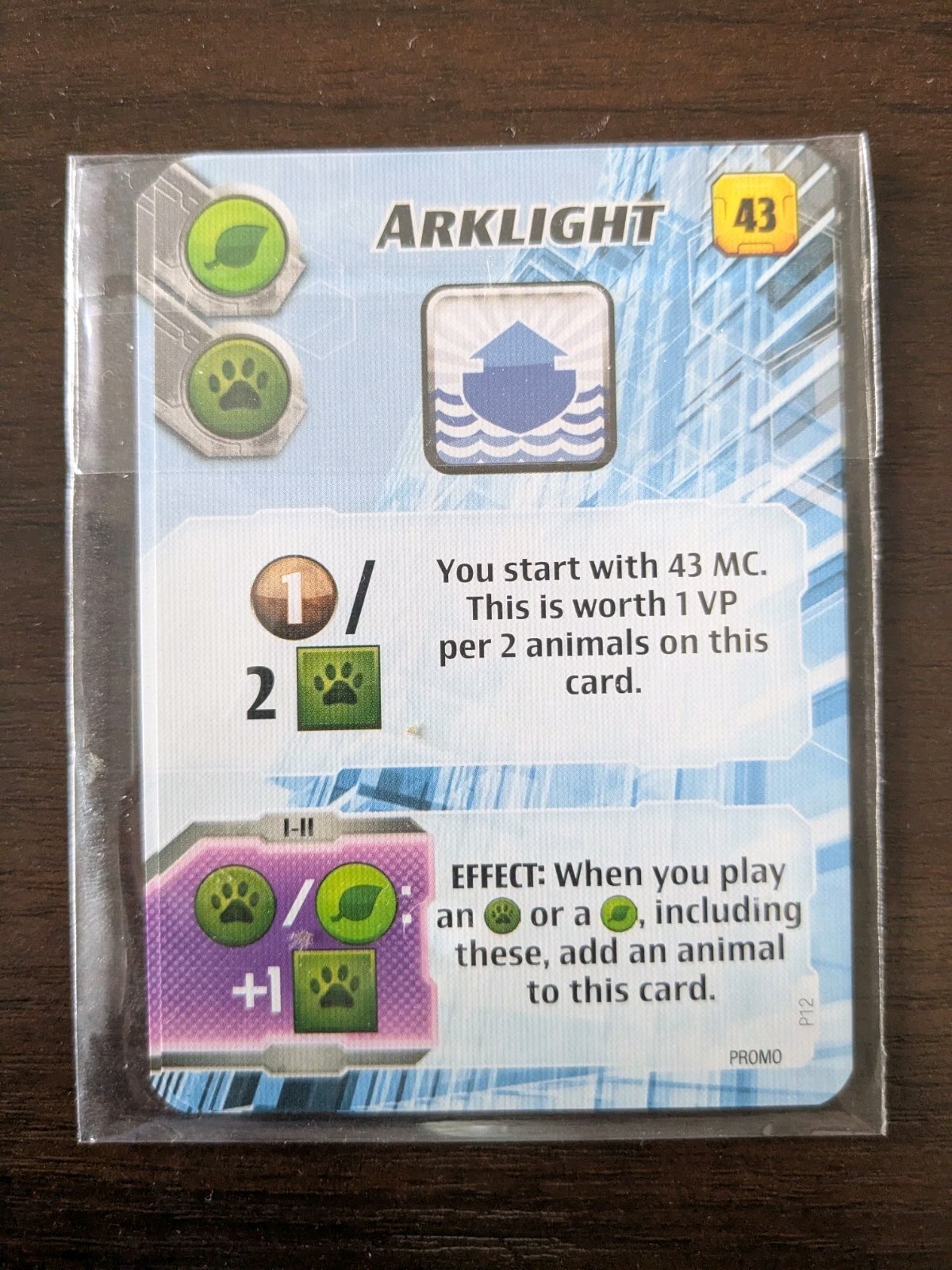
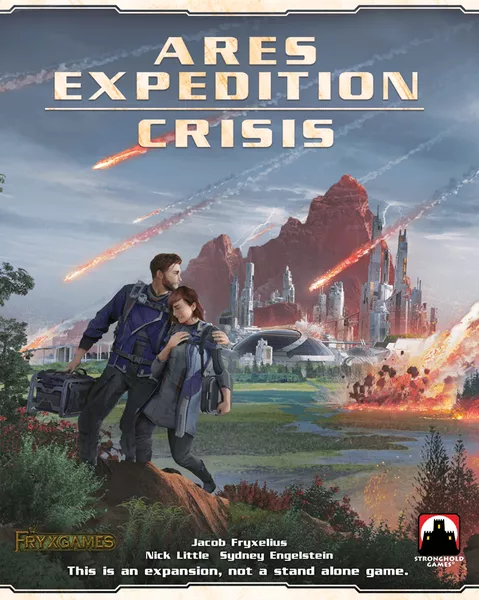
If I’m being honest, one of the things that most boosted this game for me is that I played it with Crisis, and I think that may end up being a huge part of why I will hopefully keep coming back to it. Thematically, I actually think it’s pretty cool. Instead of just corporations trying to optimize Mars for profit, the expansion reframes things around trying to save a collapsing terraform effort after a catastrophic asteroid collision. Mars is regressing, oxygen is dropping, oceans are freezing, temperature is falling, and you’re trying to stabilize everything before it completely falls apart. That’s a pretty good hook, honestly, and it gives the game a more immediate sense of pressure than the base competitive mode naturally has. The Crisis rules also create a proper win/loss structure where if the terraforming metrics slip too far or you run out of Crisis cards before stabilizing the planet, you lose.
It also seems to give meaning to victory points, which to my knowledge, the base solo mode doesn’t (but I could be wrong here).
More importantly, mechanically, I think it fixes one of the common “engine builder” issues where your machine finally gets good right as the game ends. Here, it feels like you actually need your engine online because you have to keep using it to fight off problems all the way into the endgame. That’s cool. That’s meaningful. It makes the whole thing feel a little more urgent and a little more alive. I also like that it has scalable difficulty, because that always matters a lot in solo and co-op stuff for me.
That said, I can also already see some potential cracks there. My biggest concern is that Crisis might end up feeling a little samey over time, because all the global parameters need to be managed together and under control at the same time, which makes me think there may eventually be a kind of “general correct balancing strategy” that starts to emerge. Maybe the corporations and variance are enough to keep that fresh, maybe not. I don’t know yet. I’ve only played it once. But it’s definitely in the back of my mind. There are also some annoyances, like not all base game project cards being usable there, a bit of card draw luck, and some rules in the co-op mode not being explained as cleanly as I’d like.
Still… even with all of that, I came away from this pretty positive. I don’t think it’s going to replace the absolute best games in this style for me, and I don’t think it’s going to be for everyone, but I do think it’s a legitimately good game that hits a nice middle ground. It gives me enough of the Terraforming Mars combo satisfaction, enough of the “build a cool engine” feeling, and enough flexibility through solo and co-op to make me want to keep it around. More importantly, it feels like a game I actually want to play again, and honestly, that matters more than trying to over-declare what it is after a single play.



















Disagree With Me Here
Discussion and disagreement are welcome here — that's what makes talking about games fun. Just keep it kind. Attacks on people, not ideas, will be removed.